Everest Expedition 2026 | Complete Mount Ever...
8 August, 2026
Read More
The Mount Everest climbing season 2026 will be remembered as one of the most remarkable seasons in the history of the world's highest mountain. From difficult conditions in the Khumbu Icefall and delayed acclimatization rotations to record-breaking summit days and another historic achievement by Kami Rita Sherpa, Everest 2026 delivered almost everything that makes Himalayan mountaineering extraordinary.
Rising to 8,848.86 metres (29,031.69 ft) on the border between Nepal and Tibet, Mount Everest remains the ultimate objective for many experienced mountaineers.
Every spring, hundreds of climbers, Sherpa guides, expedition leaders, cooks, doctors and support staff travel into Nepal's Khumbu region. Their objective is simple to describe but enormously difficult to achieve: climb to the highest point on Earth and return safely.
The 2026 Mount Everest climbing season demonstrated that despite improvements in equipment, weather forecasting, supplemental oxygen and expedition logistics, Everest remains unpredictable.
Nepal issued approximately 494 Everest climbing permits during the season. Preliminary reports indicated that more than 1,000 climbers and guides reached the summit from the Nepal side, while one extraordinary summit day reportedly saw 274 people reach the top, setting a new single-day record from Nepal.
Meanwhile, legendary Nepali mountaineer Kami Rita Sherpa reached the summit for the 32nd time, extending his own world record.
For climbers considering a future Mount Everest expedition, the 2026 season offers valuable lessons about acclimatization, experience, weather, congestion, oxygen management, Sherpa support and expedition planning.
For detailed information about climbing Everest from Nepal, including itinerary, camps, services and expedition costs, see Makalu Adventure's Mount Everest Expedition via the South Col Route.
The main Everest climbing season in Nepal takes place during spring, generally between April and late May.
The reason is weather.
For much of the year, the summit of Everest is affected by extremely powerful winds associated with the jet stream. During a relatively short period before the arrival of the summer monsoon, these winds can temporarily weaken or move away from the summit.
These short periods of comparatively favourable conditions create the famous Everest summit windows.
The Mount Everest climbing season 2026 was particularly significant because Nepal's spring Everest royalty increased from USD 11,000 to USD 15,000 per foreign climber.
Despite the increase, demand for Everest remained strong.
Some of the most important figures from the season included:
Numbers, however, tell only part of the story.
To understand Everest 2026, we need to begin where almost every Nepal-side expedition begins, in the Khumbu.
For most commercial expeditions from Nepal, the best season to climb Mount Everest is spring, particularly April and May.
An Everest expedition normally begins several weeks before the actual summit attempt.
Climbers generally arrive in Nepal during late March or April before travelling toward the Everest region.
They then spend weeks acclimatizing.
This process may include trekking through the Khumbu, climbing smaller peaks, reaching Everest Base Camp and completing several rotations through the higher camps.
The actual Everest summit period usually occurs during May.
The exact timing depends on:
This is why there is never a guaranteed Everest summit date.
Professional expedition operators work with a summit window rather than a fixed summit day.
Long before most international climbers begin moving toward the summit, another group is already working on Everest.
They are commonly known as the Icefall Doctors.
Their responsibility is to establish and maintain the climbing route through the dangerous Khumbu Icefall between Everest Base Camp and Camp I.
The Khumbu Icefall is not a fixed landscape.
It is part of a moving glacier.
Massive ice blocks shift, crevasses open and close, ice towers can collapse and sections of the route can change dramatically.
The Icefall Doctors carefully identify a route, install ropes and ladders where necessary and continuously monitor conditions.
During the 2026 Everest season, this work became unusually difficult.
A huge unstable ice formation created serious concerns above the route through the Khumbu Icefall.
The danger delayed progress toward Camp I and disrupted normal acclimatization schedules.
For expedition teams already preparing at Base Camp, there was little they could do except wait.
Eventually, a route through the Icefall was established and climbers began moving toward Camp I at approximately 6,000 metres.
The delay demonstrated one of the fundamental principles of Everest mountaineering:
The mountain controls the schedule.
An itinerary can be carefully designed months in advance, but Everest does not follow itineraries.
Weather, snow, ice movement and avalanche danger always take priority.
The overwhelming majority of climbers during the Mount Everest climbing season 2026 approached the summit through Nepal using the classic South Col and Southeast Ridge route.
This is broadly the route associated with the historic first confirmed ascent of Mount Everest by Tenzing Norgay Sherpa and Sir Edmund Hillary on 29 May 1953.
Today, the South Col route remains the principal climbing route used by expeditions operating from Nepal.
Makalu Adventure operates a comprehensive Everest South Col Expedition from Nepal, with acclimatization, Base Camp support, high-altitude camps and climbing Sherpa assistance.
Let's examine the route.
The expedition's climbing phase begins at Everest Base Camp, located beside the Khumbu Glacier at approximately 5,364 metres.
During the spring climbing season, Base Camp becomes a temporary international mountaineering village.
Expedition teams establish:
For climbers, Base Camp is home for several weeks.
Those who want to experience this extraordinary location without attempting the summit can explore Makalu Adventure's Everest Base Camp Trek Complete Guide.
Above Base Camp, however, trekking ends and serious mountaineering begins.
The first major challenge is the Khumbu Icefall.
It is one of the most famous and objectively dangerous sections of the Everest South Col route.
Climbers negotiate:
Teams usually travel through the Icefall during the coldest part of the night or early morning.
Lower temperatures can temporarily stabilize sections of the glacier.
Nevertheless, risk can never be completely eliminated.
Experienced climbers therefore try to move efficiently through the Icefall rather than spending unnecessary time there.
Above the Icefall lies Camp I at approximately 6,035 metres.
From Camp I, climbers enter the spectacular Western Cwm.
The Western Cwm is a broad glacial valley surrounded by Everest, Lhotse and Nuptse.
At first glance, this section may appear relatively straightforward compared with the Khumbu Icefall.
But appearances can be misleading.
Solar radiation reflects from the snow and surrounding mountain walls, sometimes producing surprisingly warm daytime temperatures.
Climbers must carefully manage hydration and energy.
Makalu Adventure establishes Camp II at approximately 6,474 metres.
Camp II is also known as Advanced Base Camp and becomes an important operational centre during the expedition.
Climbers may spend several nights here during acclimatization rotations before returning to Base Camp.
Above Camp II stands one of the most recognizable sections of the Everest route:
The Lhotse Face.
The route becomes significantly steeper.
Climbers ascend snow and ice using fixed ropes, crampons and ascenders.
Makalu Adventure positions Camp III at approximately 7,158 metres.
At this elevation, the effects of altitude become increasingly serious.
The atmospheric pressure is dramatically lower than at sea level.
Everything becomes more difficult.
Walking is slower.
Sleeping becomes difficult.
Appetite often decreases.
Even simple tasks such as putting on boots, organizing equipment or melting snow require additional energy.
This is where proper acclimatization becomes essential.
Above Camp III, climbers continue toward the Yellow Band, Geneva Spur and finally the South Col.
Camp IV is established at approximately 7,900 metres.
This is the final high camp before the summit attempt.
It also sits at the edge of what mountaineers commonly call the Death Zone.
The term generally refers to elevations above approximately 8,000 metres, where the human body cannot properly acclimatize.
At these altitudes, climbers are operating on limited reserves.
Most commercial Everest climbers use supplemental oxygen.
Time becomes extremely important.
The objective is not to remain at these elevations longer than necessary.
At Camp IV, climbers rest, eat and drink as much as possible, check oxygen equipment and prepare for summit night.
Years of preparation can eventually come down to a single night.
Most Everest summit attempts begin late in the evening.
Climbers leave the South Col wearing:
The route climbs through the darkness toward the Balcony, South Summit and Southeast Ridge.
Every movement requires effort.
At these elevations, climbers must continuously monitor themselves and their equipment.
Eventually, those who remain strong enough and encounter favourable conditions reach the highest point on Earth:
Mount Everest, 8,848.86 metres.
The view from the summit extends across some of the greatest mountains in the Himalaya, including Lhotse, Makalu and Cho Oyu.
But reaching the summit represents only half the challenge.
The climber must descend.
One of the most important lessons for prospective Everest climbers is that reaching the summit does not mean the expedition is finished.
Many serious accidents happen during descent.
After hours of climbing at extreme altitude, climbers may be:
This is why experienced expedition leaders establish turnaround times.
If conditions deteriorate or a climber is moving too slowly, continuing toward the summit can become extremely dangerous.
The mountain will remain.
A climber can return another year.
A successful Everest expedition should therefore be defined as:
Reaching the summit when conditions allow and returning safely to Base Camp.
One of the biggest stories of the Mount Everest climbing season 2026 came during the main May summit window.
On 20 May 2026, approximately 274 climbers and guides reportedly reached the summit from the Nepal side in a single day.
It established a new single-day Everest summit record from Nepal.
The achievement demonstrated the extraordinary logistical capability of modern Everest expeditions.
But it also highlighted one of the biggest challenges facing modern Everest:
Congestion.
When hundreds of climbers target the same summit window, bottlenecks can form at narrow sections of the route.
At sea level, waiting in a queue is inconvenient.
Above 8,000 metres, waiting can become dangerous.
Every additional hour means:
Summit strategy must therefore consider much more than weather.
Expedition leaders need to understand how other teams are moving and decide whether attempting the summit on the busiest day is actually the safest choice.
The Everest climbing season 2026 also produced another extraordinary chapter in Himalayan mountaineering history.
On 17 May 2026, legendary Nepali mountaineer Kami Rita Sherpa reached the summit of Everest for the 32nd time.
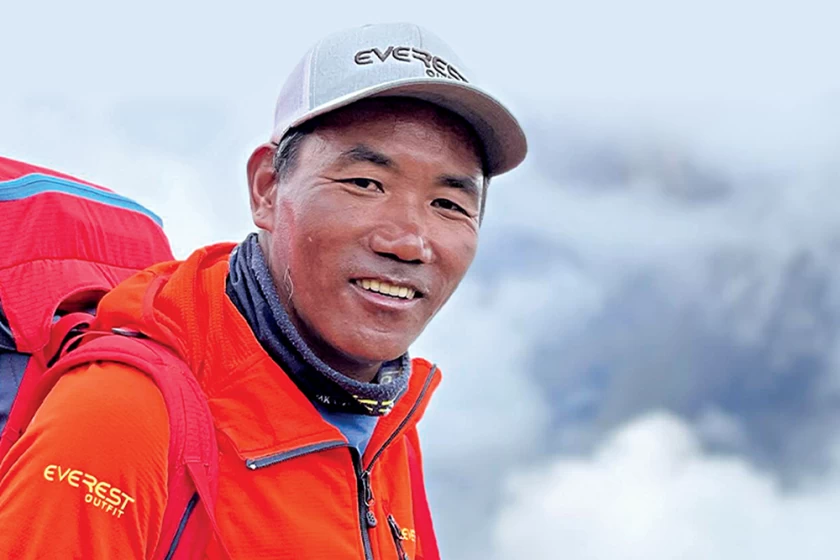
The achievement extended his own world record.
Kami Rita first climbed Everest in 1994 and has spent decades working on high-altitude expeditions.
His record also draws attention to something every international Everest climber should understand:
Sherpa climbers are fundamental to modern Himalayan mountaineering.
Long before many international climbers arrive, Nepali mountain professionals are already working.
They:
Their knowledge of the mountain, high-altitude experience and professional skill are among the foundations of successful Everest expeditions.
Despite a very high number of successful ascents, Everest 2026 was not without tragedy.
Reports indicated five fatalities on Everest during the season.
Each accident has individual circumstances and should not be reduced to a statistic.
However, they remind prospective climbers that Everest remains an extreme environment.
The major risks include:
One principle should guide every high-altitude expedition:
Acclimatization cannot be rushed.
The human body needs time to adapt to reduced oxygen availability.
Makalu Adventure's Everest itinerary places significant emphasis on progressive acclimatization before and during the climbing phase.
Instead of simply travelling quickly toward Base Camp, climbers can gain additional altitude exposure during the approach.
Once at Everest Base Camp, rotations progressively expose climbers to higher elevations.
A typical pattern may involve:
The exact program depends on weather, route conditions and the individual climber.
For climbers building experience toward Everest, Makalu Adventure also organizes Mera Peak Climbing, a 6,476-metre Himalayan objective where climbers can develop valuable high-altitude experience.
Mount Everest should not be a climber's first serious mountain.
Prospective Everest climbers should ideally have experience on progressively higher and more demanding peaks.
Important skills include:
Experience above 6,000 metres and 7,000 metres can be extremely valuable.
For climbers looking for a more technical Himalayan challenge before Everest, the Ama Dablam Expedition provides experience on steep rock, snow, ice and exposed ridges.
Those building broader Himalayan climbing experience can also explore Makalu Adventure's peak climbing expeditions in Nepal.
The cost of climbing Everest changed significantly for the 2026 climbing season.
Nepal increased its spring Everest royalty from:
USD 11,000 to USD 15,000 per foreign climber.
But the government permit represents only one part of the actual cost of an Everest expedition.
A professional expedition involves:
Makalu Adventure's current Mount Everest South Col Expedition lists a Full Expedition Service at USD 39,500 per person.
When comparing Everest expedition prices, climbers should therefore never look only at the advertised price.
Compare what is actually included.
More importantly, determine what support will be available above Base Camp.
As the popularity of Everest increases, responsible mountaineering becomes increasingly important.
Every expedition produces waste.
Food packaging, oxygen cylinders, damaged equipment and human waste must be managed responsibly.
Government agencies, local organizations and expedition operators have introduced stricter systems for managing waste on Everest.
But protecting the mountain is ultimately a shared responsibility.
Every climber has a role.
The Everest region is not simply an adventure destination.
It is home to Sherpa communities whose history, religion and culture are deeply connected to the Himalaya.
Respect for Everest therefore includes respect for:
Responsible climbing should leave the smallest possible environmental footprint.
The Mount Everest climbing season 2026 provides several important lessons.
Wanting to climb Everest is not enough.
Climbers need years of preparation, experience and physical conditioning.
Spending additional time adapting to altitude can dramatically improve a climber's ability to perform higher on the mountain.
No expedition company can guarantee a summit.
Good operators create opportunities while respecting conditions.
The record summit day of 2026 demonstrated that congestion itself can become a mountaineering hazard.
Experienced high-altitude professionals provide knowledge, logistical support and decision-making capability that can become critical high on Everest.
The strongest mountaineers understand that retreat is sometimes part of climbing.
Everest will still be there.
If Everest is part of your long-term mountaineering goal, preparation should begin years rather than weeks before departure.
A sensible progression could include:
Stage 1: Develop technical skills
Learn crampon use, ice axe technique, fixed-rope movement and glacier travel.
Stage 2: Climb 5,000m to 6,000m mountains
Develop familiarity with altitude and multi-day climbing.
Stage 3: Attempt demanding 6,000m peaks
A mountain such as Mera Peak can provide useful altitude experience.
Stage 4: Gain technical Himalayan experience
Consider a technically demanding objective such as Ama Dablam.
Stage 5: Gain 7,000m or 8,000m experience
For highly experienced mountaineers, larger expeditions provide important experience of prolonged high-altitude climbing.
Makalu Adventure organizes a range of mountaineering expeditions in Nepal, including Everest, Lhotse, Cho Oyu and other major Himalayan objectives.
Experienced climbers seeking another major 8,000-metre challenge can also consider the Makalu Expedition.
Climbing Everest requires much more than obtaining a permit and reaching Base Camp.
A serious expedition requires:
Makalu Adventure has extensive experience organizing trekking and mountaineering expeditions throughout Nepal and the Himalaya.
The company's Mount Everest Expedition via the South Col is a 55-day program beginning and ending in Kathmandu.
Makalu Adventure's South Col program uses five principal locations on the mountain:
The objective is not simply to get climbers onto Everest.
The objective is to provide the structure, acclimatization and support required for experienced mountaineers to make a responsible summit attempt.
The 2026 Mount Everest climbing season will occupy a distinctive place in Everest history.
It produced more than a thousand reported ascents from Nepal.
It produced a record-breaking summit day.
It saw Kami Rita Sherpa extend his Everest record to 32 successful ascents.
It demonstrated the extraordinary work of the Icefall Doctors and other Nepali high-altitude professionals.
But Everest 2026 also raised important questions about the future.
How many climbers can safely move through the summit route during a narrow weather window?
How experienced should Everest climbers be before receiving a permit?
How can congestion be reduced?
How can high-altitude waste be better managed?
How can Nepal continue benefiting from mountaineering tourism while improving safety and environmental protection?
These questions will continue to shape future Everest climbing seasons.
When was the Mount Everest climbing season 2026?
The main Nepal-side Everest climbing season ran through spring, with expeditions generally operating during April and May. Most summit attempts took place during suitable weather windows in May.
How many Everest climbing permits were issued in 2026?
Nepal issued approximately 494 Everest climbing permits for the 2026 spring season.
How many people climbed Mount Everest in 2026?
Preliminary reports indicated that more than 1,000 climbers and guides reached the summit from Nepal during the 2026 season.
What was the Everest single-day summit record in 2026?
Approximately 274 climbers and guides reportedly reached the summit from Nepal on 20 May 2026, establishing a new Nepal-side single-day record.
How many times has Kami Rita Sherpa climbed Everest?
Kami Rita Sherpa completed his 32nd Mount Everest summit in May 2026, extending his own world record.
How high is Mount Everest?
Mount Everest has an officially recognized elevation of 8,848.86 metres (29,031.69 ft).
What is the main Everest climbing route from Nepal?
The principal Nepal-side route follows the Khumbu Icefall, Western Cwm, Lhotse Face, South Col and Southeast Ridge to the summit.
How much was the Everest permit in 2026?
Nepal's spring Mount Everest climbing royalty for foreign climbers was USD 15,000 per person for the 2026 season.
How long does an Everest expedition take?
A professional Everest expedition generally takes several weeks because climbers need sufficient time for acclimatization, climbing rotations, recovery and waiting for a suitable summit window. Makalu Adventure's South Col Everest expedition is scheduled for 55 days.
Can beginners climb Mount Everest?
Everest is not suitable as a first mountaineering objective. Climbers should have strong technical skills, excellent physical conditioning and previous high-altitude climbing experience.
What is the best month to climb Mount Everest?
May is generally the primary summit month on the Nepal side because short periods of more favourable weather often occur before the summer monsoon.
How can I prepare for an Everest expedition?
Preparation should include cardiovascular endurance, strength training, long uphill days carrying weight, technical mountaineering training and previous experience at progressively higher altitudes.
Mount Everest remains the ultimate mountaineering objective for climbers around the world. Makalu Adventure organizes professionally supported Himalayan expeditions for mountaineers seeking Everest and other major high-altitude objectives. Explore the complete Mount Everest Expedition from Nepal via the South Col for information about the route, itinerary, camps, expedition services, dates and costs.
For climbers who are still building experience toward Everest, explore Makalu Adventure's peak climbing programs in Nepal, including Mera Peak Climbing, or consider the more technical Ama Dablam Expedition.
For experienced 8,000-metre mountaineers seeking another major Himalayan challenge, discover the Makalu Expedition.
![Complete Guide to Mera Peak Climbing 2026 [Updated]](https://makaluadventure.com/public/uploads/frontend/thumb/mera_peak_climbing_168883208074961.jpg)