The Green Boots on Mount Everest: The Tragic ...
22 August, 2026
Read More
Mount Everest is more than the world's highest mountain. For generations of mountaineers, it has represented the ultimate test of experience, endurance, judgment, patience, and ambition. Standing at 8,848.86 metres (29,031.7 feet) above sea level, Everest rises on the border between Nepal and Tibet and dominates the history and imagination of Himalayan mountaineering.
For climbers considering an Everest Expedition 2026 from Nepal, reaching the summit is only one part of a much larger undertaking. An Everest expedition involves weeks of acclimatization, repeated rotations between high camps, technical movement on fixed ropes, careful oxygen management, exposure to extreme cold, weather forecasting, long periods of waiting, and difficult decisions about when to continue and when to turn around.
Everest should therefore not be approached simply as a famous mountain to add to a climbing record. It is a serious high-altitude expedition that requires previous mountaineering experience, excellent physical condition, technical competence, financial preparation, reliable logistical support, and respect for the mountain.
This guide explains what climbers should understand before attempting the Everest Expedition 2026, including the South Col route, acclimatization, camps, Sherpa support, supplemental oxygen, expedition cost, training, safety, and the important difference between Full Expedition Service and Base Camp Service.
Mount Everest is known as Sagarmatha in Nepal and Chomolungma in Tibetan. The first confirmed ascent was made on 29 May 1953 by Tenzing Norgay Sherpa and Sir Edmund Hillary through the Nepal side of the mountain.
Today, the most established route from Nepal remains the South Col or Southeast Ridge Route. Climbers approach Everest through the Khumbu region before reaching Everest Base Camp on the Khumbu Glacier.
From Base Camp, the climbing route progresses through the Khumbu Icefall to Camp I, continues across the Western Cwm to Camp II, climbs the Lhotse Face toward Camp III, reaches Camp IV on the South Col, and then continues through the upper Southeast Ridge toward the summit.
On paper the route can appear straightforward. On the mountain, each section presents a different combination of altitude, technical movement, exposure, weather, crevasses, steep snow and ice, fatigue, and objective hazards.
Everest is not normally described as the most technically difficult 8,000-metre mountain, but that description should never be confused with easy. At extreme altitude, even simple climbing tasks become much harder.
The Everest expedition does not truly begin when a climber enters the Khumbu Icefall. Acclimatization should begin much earlier.
Many expeditions approach Everest Base Camp through the traditional Khumbu trail, passing through mountain settlements and gradually gaining elevation. A carefully designed approach allows climbers to start adapting to lower oxygen levels while still sleeping in relatively comfortable lodges.
Makalu Adventure's South Col itinerary takes a particularly long acclimatization approach. Rather than going directly to Everest Base Camp, climbers pass through Khunde and Khumjung, continue toward the Gokyo Valley, cross Cho La Pass, and climb Lobuche East before moving to Everest Base Camp.
Lobuche East reaches approximately 6,090 metres, giving members an opportunity to experience an altitude similar to Everest Camp II before beginning their main rotations. It also allows climbers to refresh skills such as crampon use, rope movement, equipment management, and high-altitude pacing.
For an Everest climber, time spent acclimatizing is not a delay. It is preparation.
Everest Base Camp sits at approximately 5,364 metres on the Khumbu Glacier. During the spring climbing season it becomes a temporary mountain settlement containing expedition teams from around the world.
For climbers, Base Camp becomes home for several weeks.
It is where they sleep between rotations, eat, recover, communicate with family, monitor weather forecasts, prepare equipment, and wait for suitable conditions.
A well-organized Base Camp is much more important than it may appear before an expedition. Climbers returning from several nights at Camps I, II, or III may be exhausted, dehydrated, and in need of proper recovery. Good food, warmth, rest, communications, charging facilities, hygiene, medical support, and comfortable sleeping arrangements all contribute to maintaining physical and mental strength.
Everest is not climbed by continuously moving upward. Much of a successful expedition involves climbing higher, returning lower, recovering, and repeating the process.
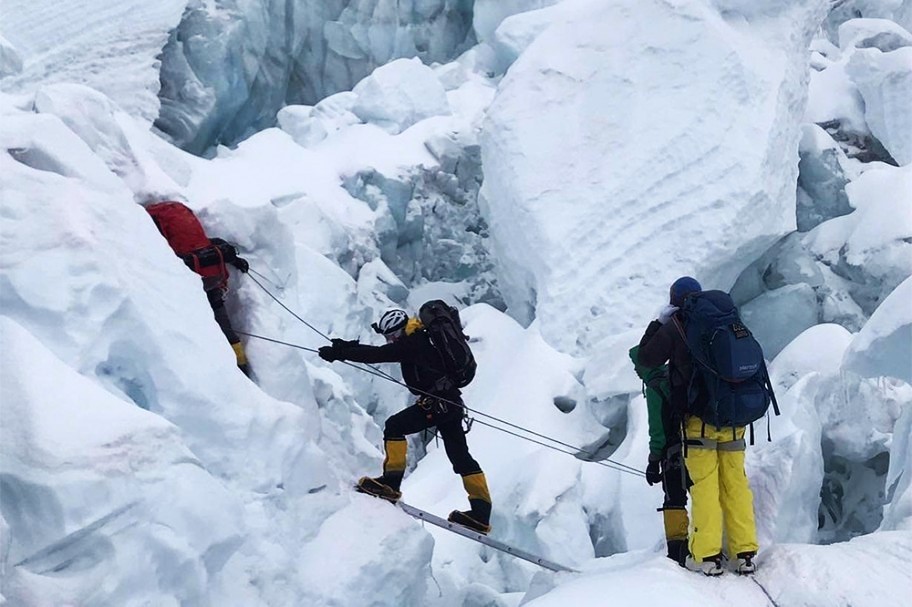
Immediately above Everest Base Camp lies one of the most famous sections of the mountain, the Khumbu Icefall.
The Icefall is a moving section of glacier filled with enormous blocks of ice, crevasses, seracs, and constantly changing terrain. A route is prepared using fixed ropes and crossing systems, but the glacier itself remains dynamic.
Climbers therefore try to move through the Icefall efficiently and minimize unnecessary exposure.
Above the Icefall lies Camp I. Makalu Adventure places Camp I at approximately 6,035 metres, near the entrance to the Western Cwm.
This may be the first point where some climbers genuinely feel the seriousness of the altitude. Sleeping can become difficult, appetite can change, and routine tasks inside a tent require more effort.
The purpose of staying here during rotations is to give the body controlled exposure to higher elevation before returning lower to recover.
From Camp I, climbers cross the Western Cwm toward Camp II.
The Western Cwm is surrounded by Everest, Lhotse, and Nuptse. Despite being enclosed by ice and snow, it can become surprisingly warm in strong sunlight because solar radiation reflects from the surrounding surfaces.
Crevasses remain part of the terrain, and climbers must continue moving carefully.
Camp II sits at approximately 6,474 metres in Makalu Adventure's camp system and functions almost like an Advanced Base Camp.
Climbers may spend several nights here during their acclimatization rotations. It is an important place for eating, resting, hydrating, and preparing for the Lhotse Face.
Reaching Camp II is also psychologically significant. Everest Base Camp now feels far below, and the upper mountain begins to dominate the view.
Above Camp II, climbers ascend the Lhotse Face using fixed ropes.
The terrain becomes steeper and more demanding. Efficient movement becomes increasingly important because every unnecessary action consumes valuable energy.
Makalu Adventure places Camp III at approximately 7,158 metres.
At this elevation, the body can no longer recover in the same way it does lower down. Sleep becomes difficult, appetite may decline, and even small activities can feel exhausting.
Spending time at Camp III during acclimatization can provide important altitude exposure before a climber returns to Base Camp for recovery.
The aim is not to stay high for as long as possible. The aim is to stimulate acclimatization without unnecessarily weakening the body.
Camp IV is established on the South Col at roughly 7,900 metres.
This is the final camp before the Everest summit attempt.
Camp IV is not a comfortable place. Winds can be extremely strong, temperatures are severe, and climbers are already heavily fatigued when they arrive.
Above 8,000 metres lies what mountaineers commonly call the Death Zone. At this altitude, the human body cannot properly acclimatize and begins deteriorating even while resting.
For this reason, climbers need to minimize unnecessary time at extreme altitude.
Oxygen management, hydration, weather, climbing speed, equipment reliability, Sherpa support, and turnaround decisions become especially important during this stage of the expedition.
The summit attempt generally begins from Camp IV late in the evening or during the night.
Climbers move in darkness using headlamps and supplemental oxygen. Progress is slow, deliberate, and physically demanding.
The route continues toward the Balcony, South Summit, and the exposed Southeast Ridge before reaching the summit at 8,848.86 metres.
At this elevation, every movement requires effort.
Climbers may take several breaths between steps. Cold affects fingers, feet, equipment, masks, regulators, and concentration. Fatigue accumulated during the previous weeks does not disappear simply because the summit is near.
This is why experienced mountaineers place so much importance on turnaround decisions.
Reaching the summit is optional.
Returning safely is essential.
The expedition is not complete when a climber reaches 8,848.86 metres. The descent back to Camp IV and ultimately to Base Camp is still part of the climb.
Everest expeditions vary in length depending on the acclimatization strategy used by the operator.
Makalu Adventure's South Col program is currently structured over 55 days, beginning and ending in Kathmandu.
The itinerary includes the trek and acclimatization journey, Lobuche East, arrival at Everest Base Camp, mountain rotations, recovery periods, summit attempt, contingency time, and the return from Base Camp.
A shorter itinerary is not automatically better.
When comparing Everest programs, climbers should pay more attention to how acclimatization is achieved than simply to the total number of days.
Makalu Adventure recommends previous high-altitude climbing experience, preferably above 7,000 metres, together with excellent physical condition.
Many climbers build toward Everest gradually through 6,000-metre peaks, technically appropriate 7,000-metre expeditions, and sometimes another 8,000-metre mountain such as Manaslu.
There is no single perfect progression, but genuine high-altitude competence matters.
Physical training should begin many months before the expedition.
Everest requires endurance more than short bursts of strength. Long uphill hiking days, cardiovascular training, weighted backpack training, stair climbing, cycling, running, ski touring, and strength work can all contribute to preparation.
Leg strength, core stability, back strength, and muscular endurance are particularly useful.
However, gym fitness is only one part of Everest preparation.
A climber also needs mountain efficiency.
You should be comfortable putting on crampons in cold conditions, using an ascender while wearing gloves, adjusting clothing quickly, managing hydration, organizing equipment inside a small tent, and moving for many hours without wasting energy.
It is also important to understand that fitness and acclimatization are different. A very fit person can still become seriously ill at altitude.
Most commercially supported Everest climbers use supplemental oxygen on the upper mountain.
Before booking an expedition, climbers should understand exactly what the oxygen package includes.
Makalu Adventure's Full Expedition Service currently specifies six oxygen bottles per client, together with a mask and regulator and an emergency mask and regulator. Oxygen is also provided for climbing Sherpas according to the company's published inclusions.
Prospective clients should ask about the number of cylinders, intended flow rates, backup oxygen, mask and regulator systems, where oxygen is stored, whether rotation oxygen is included, and how additional cylinders are charged if needed.
"Oxygen included" is not enough information.
Sherpa climbers and high-altitude workers are central to Everest expeditions from Nepal.
They help move equipment, establish camps, carry oxygen, assist clients, support rotations, and accompany climbers during summit attempts.
The level of support varies considerably between expedition packages.
Makalu Adventure's Full Expedition Service currently states one private climbing Sherpa per client, together with support for carrying equipment above Base Camp.
This is an important detail when comparing operators because two similarly priced expeditions may offer very different Sherpa-to-client ratios.
Climbers should always ask who will support them above Base Camp and whether that person remains individually assigned throughout the expedition.
Everest expedition prices vary considerably because operators provide very different levels of service.
Makalu Adventure currently lists its 2026 Full Expedition Service at USD 39,500 and Base Camp Service at USD 25,000.
The difference is not simply about comfort.
It represents a significant difference in how much support is provided above Everest Base Camp.
This is why climbers should avoid comparing Everest expedition prices without comparing the actual inclusions.
Makalu Adventure's Full Expedition Service includes the Everest expedition government royalty, Kathmandu accommodation, Kathmandu-Lukla flights, transport of luggage to and from Base Camp, Base Camp facilities and meals, support staff, high-altitude tents, food up to Camp IV and the summit, high-altitude cooking equipment, oxygen, climbing Sherpa support, rope-fixing charges, communications equipment, and other expedition logistics.
It also includes one private climbing Sherpa for each client and high-altitude support above Base Camp.
Base Camp Service is different.
It includes important logistical components such as Kathmandu accommodation, flights, expedition royalty, Base Camp accommodation, Base Camp meals, expedition administration, staff, porter costs, generator and solar facilities, environmental fees, communications, and Base Camp management.
However, the published Base Camp Service does not include the same individual high-altitude climbing support, oxygen allocation, high-camp tents, high-altitude food, and private climbing Sherpa arrangements provided in the Full Expedition Service.
Base Camp Service is therefore more appropriate for experienced independent mountaineers or teams capable of organizing much of their own operation above Base Camp.
For most climbers seeking a professionally supported Everest ascent, the Full Expedition Service is the more relevant product to compare with similar guided Everest packages.
Do not choose an Everest operator by asking only, "How much does it cost?"
Ask what happens after you leave Base Camp.
Find out how many oxygen cylinders are allocated to you, whether you have a private climbing Sherpa, how high-altitude tents are arranged, whether food is supplied at Camps I to IV, who carries expedition equipment, which communication systems are available, how weather forecasting is handled, and what emergency procedures exist.
Ask about rescue coordination and medical support.
Confirm whether the Everest climbing permit is included.
Ask about high-altitude baggage allowances, domestic flights, tips, summit bonuses, additional oxygen costs, additional hotel nights, insurance requirements, and any expenses not included in the published price.
Most importantly, ask who has authority to stop a summit attempt if conditions become unsafe.
A professional operator should be comfortable answering difficult questions.
Spring is the main climbing season on Everest from the Nepal side.
Teams generally arrive during April, spend several weeks acclimatizing and completing rotations, and wait for suitable summit weather windows during May.
Weather cannot be scheduled months in advance.
Climbers may spend days at Base Camp waiting for wind speeds to decrease and conditions to improve.
Patience is an essential Everest skill.
The Everest Expedition 2026 is not simply a journey to the highest point on Earth.
It is the result of years of mountaineering experience, months of physical preparation, weeks of acclimatization, and hundreds of decisions made along the way.
The strongest climber is not necessarily the one who reaches the summit fastest.
It may be the climber who manages energy carefully, listens to the guide, respects altitude, understands the weather, recognizes personal limits, and is willing to turn around when conditions are no longer acceptable.
Everest rewards preparation, patience, teamwork, and humility.
For anyone considering the climb, the most important preparation begins before booking.
Standing at 8,848.86 metres is an extraordinary achievement.
Coming home safely is the real success.
![Complete Guide to Mera Peak Climbing 2026 [Updated]](https://makaluadventure.com/public/uploads/frontend/thumb/mera_peak_climbing_168883208074961.jpg)