The Green Boots on Mount Everest: The Tragic ...
22 August, 2026
Read More
Conquering Mera Peak, the second-highest trekking peak in Nepal at 6,476 meters (21,247 ft), is a dream for many mountaineers. As the spring climbing season peaks in April 2026, the conditions are ideal for a successful summit. This guide combines essential expedition details with real-world success stories from climbers and the expert team at Makalu Adventure to help you plan your own Himalayan adventure.
The 2026 climbing season has already seen significant activity on Mera Peak, with important updates and inspiring ascents.
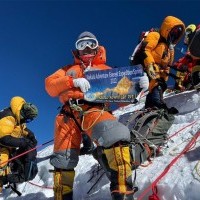
New Summit Signage: The Nepal Mountaineering Association (NMA) has installed new summit signage on Mera Peak to enhance the verification and certification process for successful climbs. All climbing teams are now requested to include the new board in their summit photographs for certification purposes.
Early Season Climbs: Azerbaijani mountaineer Israfil Ashurlu opened his 2026 climbing season with a successful ascent of Mera Peak. Meanwhile, a team of climbers from Cyprus set a new Guinness World Record by conducting a fitness session on the summit of Mera Peak.
Weather and Challenges: While spring offers stable weather and high success rates, the mountain remains unpredictable. In late March 2026, the NMA had to rescue four foreign climbers and a Nepali guide who were stranded while descending from the summit due to a sudden change in weather. This serves as a stark reminder of the importance of proper acclimatization and expert guidance.
Key Success Statistic: According to Makalu Adventure, the overall success rate on Mera Peak in 2022 was just above 50%, mostly due to a lack of fitness and proper acclimatization. However, with longer itineraries (over 18 days) and proper training, success rates can climb to 80–90%.
The best way to understand the challenge and reward of Mera Peak is through the experiences of those who have stood on its summit. Here are two incredible success stories from climbers who partnered with Makalu Adventure, a pioneer in Himalayan expeditions.
“Good guides make a big difference in these dangerous climbs.”
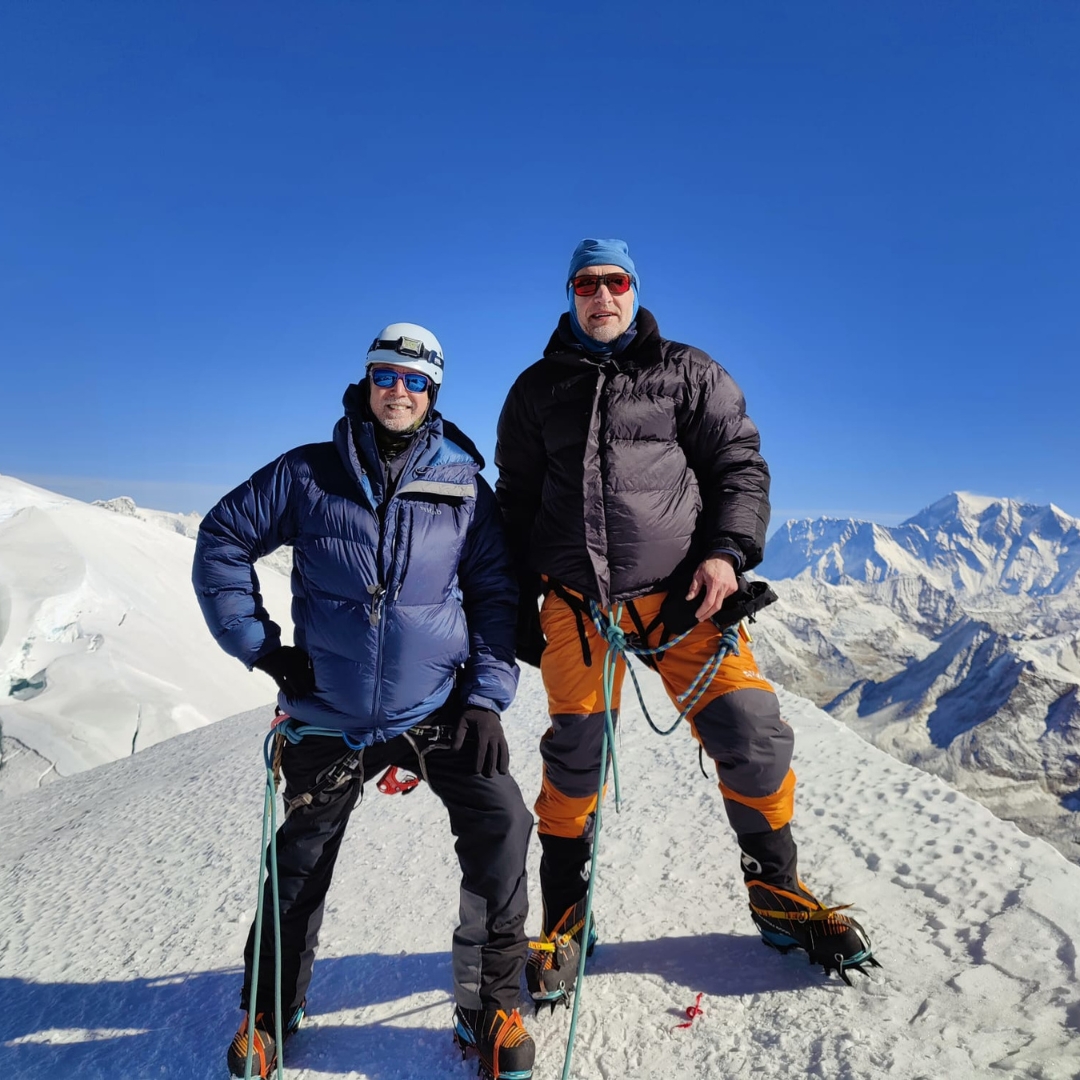
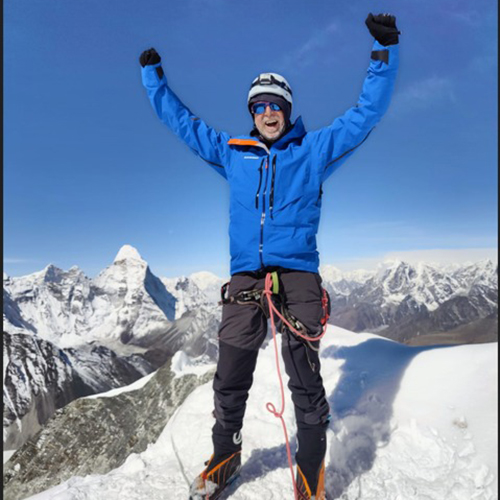
On April 12, 2025, at 8:17 AM, 28-year-old Steve David Booth reached the summit of Mera Peak, witnessing a sunrise like no other. But Steve didn't stop there. Less than a week later, on April 19th at 8:57 AM, he submitted Island Peak (6,189 m), achieving a rare back-to-back double success.
Steve's climb was supported by Makalu Adventure and his guide, Janga Bahadur Rai. Janga’s experience was key in navigating the tough terrain and keeping Steve focused. Steve’s success was built on prior experience climbing Mount Toubkal in Morocco and the three highest peaks of Mexico, proving that a strong foundation of fitness and technique is essential for Himalayan peaks.
While not a Mera Peak ascent, this story highlights the caliber of expeditions organized by Makalu Adventure. On April 7, 2025, Babar Ali became the first Bangladeshi to successfully summit Annapurna I (8,091 m), one of the most treacherous peaks in the Himalayas.
This historic achievement was made possible with the support of his guide, Phurba Onggel Sherpa, and the organizing efforts of Makalu Adventure. Babar’s success is a milestone in Bengali mountaineering, proving that with determination and a strong support system, even the most formidable peaks can be conquered.
Mera Peak is graded Alpine Grade PD (Slightly Difficult), meaning it's a non-technical climb but physically demanding due to the altitude. Climbers should be proficient with ice axes, crampons, and basic alpine mountaineering skills. The normal route is long and arduous, requiring a good level of fitness. The climb involves glacier walking and short technical sections on snow and ice.
Mera Peak climbing costs USD 2750 per person covering permits, guides, porters, accommodation, and food, with our standard 22 Days Mera Peak Climbing Itinerary.
For a spring climb (March–May), the NMA climbing permit costs USD 350 per person. In autumn (September–November), the price is USD 175 per person. Additionally, you'll need the Makalu Barun National Park entry permit and a Pasang Lhamu Rural Municipality entry permit. A typical Mera Peak expedition with a guided agency like Makalu Adventure costs between USD 2,000–3,500, covering permits, meals, accommodation, domestic flights, and guide support.
Check the cost for Government and Permit Fees
Makalu Adventure offers a comprehensive 22-day itinerary for Mera Peak climbing. Here are the key stages:
From the summit, you'll be rewarded with a spectacular 360-degree panorama that includes Mt. Everest, Mt. Lhotse, Mt. Makalu, Mt. Cho Oyu, and Mt. Kangchenjunga.
Climbing Mera Peak requires both trekking and mountaineering gear. You'll need:
A full equipment check is conducted at Khare before the summit push.
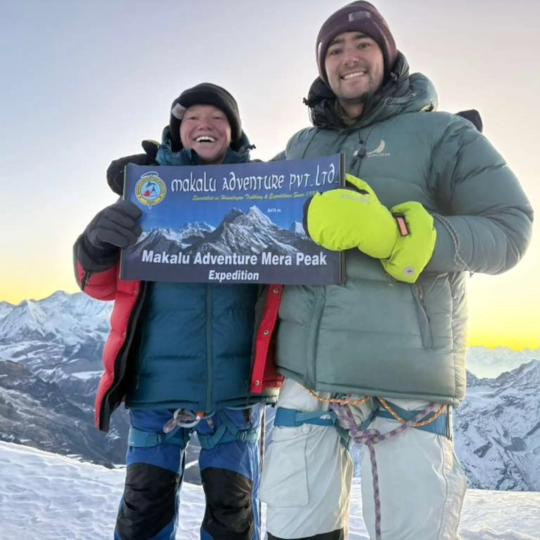
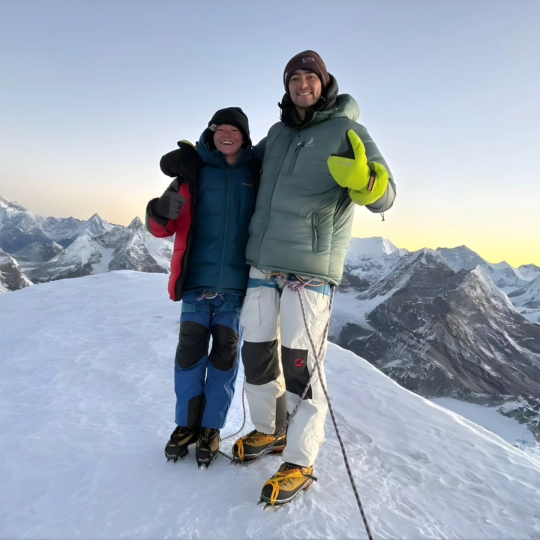
Climbing Mera Peak is a serious but achievable goal for fit trekkers with the right preparation. The key to success lies in a slow approach with ample time for acclimatization, as recommended by Makalu Adventure. They follow the acclimatization formula set out by wilderness medicine experts Drs Jim Duff and Peter Gormly: "Above 2,000m, altitude illness is a possibility and above 2,500m it becomes common".
Whether you're a first-time Himalayan climber or a seasoned mountaineer, Mera Peak in April offers a challenging yet achievable goal and a true high-altitude adventure. For more information on expeditions, you can reach out to Makalu Adventure at info@makalu-adventure.com.